John cumbers: Longevity, Biosecurity, and the Future of Synthetic Biology
Soul of Silicon Valley: Listen to the episode here
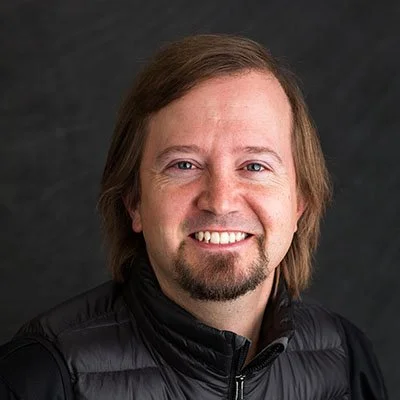
John Cumbers, CEO of SynBioBeta
John Cumbers is the CEO of SynBioBeta the leading community of innovators, investors, engineers, and thinkers passionate about using synthetic biology to build a more sustainable future. John publishes the weekly SynBioBeta Digest, hosts the SynBioBeta Podcast, and authored “What’s Your Biostrategy?”, the first book to explore how synthetic biology is poised to disrupt virtually every industry worldwide.
John is also the founder of Betaspace, and has experience across multiple startups. He serves as an operating partner and investor at the hard tech investment fund Data Collective and is a former bioengineer at NASA. He holds a PhD in Molecular Biology, Cell Biology, and Biochemistry from Brown University and is originally from the UK.
Summary by Maya Lockwood
Longevity, Biosecurity, and the Future of Synthetic Biology
Synthetic biology is not just a scientific field. It represents a new set of tools and capabilities that are reshaping how humans understand and work with biology.
As John Cumbers explains, “Synthetic biology is not a single technology. It is a movement to make biology easier to engineer.”
With that power comes an important question: will we use these tools primarily to control biological systems, or to work with them more intelligently?
In my recent conversation with John, we discussed long-term human longevity, near-term biosecurity risks, the changing economics of biotech in 2026, and a future vision in which biology and technology are more closely aligned with natural systems.
Despite recent advances, we are still early in understanding what is possible. The key issue is not whether progress will continue, but who participates in shaping it and what values guide development.
Synthetic Biology Is Becoming an Engineering Discipline
John frames synthetic biology as an effort to transform biology into a more systematic engineering field.
Historically, genetic engineering has been powerful but difficult to standardize. Much of the work has been customized, hard to reproduce, and challenging to scale.
As John noted, “Genetic engineering today still looks more like an artisanal craft than an engineering discipline. There is very little abstraction and very little standardization.”
The original goal of synthetic biology was to introduce repeatable processes, standardized components, and better tooling so that biological systems could be engineered more reliably and safely. This is not about replacing nature, but about understanding biological systems well enough to work with them effectively.
In previous eras, foundational technologies such as electricity, manufacturing, software, and networks defined progress. The next phase is likely to involve biology combined with artificial intelligence.
As John put it, “I want more people to understand what is happening inside a cell—where we have come from and where we are going.”
Longevity Is About Capability, Not Just Lifespan
John has been focused on longevity for many years, but he does not frame it as a wellness trend. Instead, he sees it as a broader shift in how humans think about health and aging.
Extending lifespan alone is not the main objective. More important is maintaining physical and cognitive function, resilience, and independence over time.
In his words, “Better drugs might give you ten more years. But the real breakthroughs come when we use the tools of biology to address the root causes of aging.”
The underlying idea is that if we understand the biological mechanisms that drive decline, we can intervene earlier and more systemically. This has implications not just for healthcare, but for how society thinks about work, productivity, family structures, and long-term planning.
John posed a question that reflects this scale of thinking: “If you fast-forward a thousand years, what do you think the human lifespan will be?”
He followed it with a more difficult one: “If we can extend life dramatically, do we also mature ethically fast enough to manage that responsibility?”
Longer timelines require stronger social, ethical, and governance frameworks.
Biosecurity Is a Governance and Culture Challenge
One of the more serious topics in the conversation was biosecurity. The same tools that enable medical and industrial breakthroughs can also be misused.
As biological engineering becomes easier and AI accelerates experimentation and learning, new risks emerge. These risks are not limited to individual bad actors, but include what automated or scaled systems could enable.
John summarized the concern clearly: “The two biggest risks are AI doing something malicious with biology, or AI training humans to do something malicious with biology.”
This makes biosecurity more than a regulatory issue. It becomes a cultural and governance challenge.
As John observed, “I think the AI problem is going to arrive before the biology problem.” That suggests the need for adaptive oversight that is grounded in shared values, not just reactive policy.
The Economics of Biotech Are Shifting
John also shared insights into how biotech companies are being built in the current capital environment.
With tighter funding conditions, higher interest rates, and reduced risk tolerance, many startups are focusing earlier on revenue, sustainability, and customer demand.
As John noted, “There are incredible companies being built right now that do not need venture capital to survive. They are selling real tools to real customers.”
These companies may not attract as much attention as heavily funded startups, but they often form the operational backbone of the industry.
Where previous cycles rewarded rapid growth and scale, this phase favors durable business models, practical products, and clear market demand.
As John put it, “Those kinds of businesses are healthy and resilient.”
Expanding Public Understanding of Biology
Another recurring theme was accessibility. John believes that synthetic biology should not be confined to academic or industrial labs.
“I want more people joining the movement,” he said.
SynBioBeta is structured to engage not only scientists, but also technologists, artists, policymakers, and non-specialists. Broad participation matters because when complex technologies are understood by only a small group, power becomes concentrated. Wider literacy supports more balanced decision-making and public trust.
A Solarpunk-Inspired View of the Future
Toward the end of the conversation, John described a future often referred to as “solarpunk,” which emphasizes integration between human systems and natural processes.
Rather than framing progress as humans versus nature, this perspective focuses on working within biological constraints and leveraging natural systems.
As John explained, “Solarpunk is about humans working with nature.”
In this view, biology becomes a partner in design and production, rather than a resource to be exploited. The emphasis shifts from extraction to collaboration.
Why Storytelling Matters
Beyond SynBioBeta, John is also working on an animation project aimed at introducing children to biology through accessible storytelling.
“We want to do for biology what Buzz Lightyear did for space,” he said.
The idea is that technical progress alone is not enough. Public understanding and engagement are shaped by stories, not just data. Education, imagination, and narrative play a critical role in how societies adopt and govern new technologies.
The future of biology will depend not only on scientists and engineers, but also on people who can translate complex ideas responsibly and clearly.
What Comes Next
SynBioBeta’s annual conference will take place May 4–7 at the San Jose Convention Center.
Register HERE for SynBioBeta 2026
For those outside the life sciences, participation does not require technical expertise. Curiosity and a willingness to engage thoughtfully with emerging technologies are enough to be part of the conversation.